
*This post may contain affiliate links for which I earn commissions.*
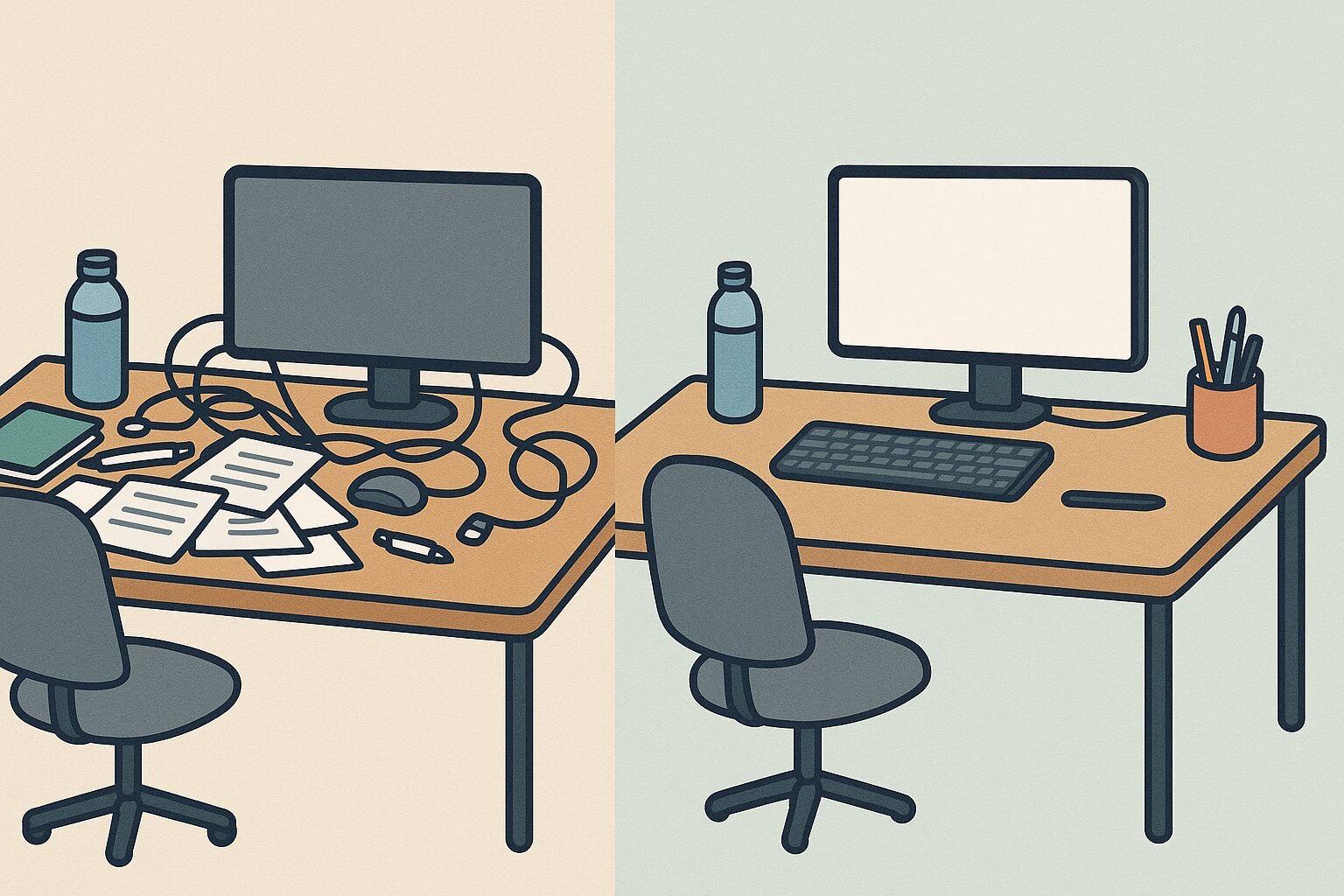
Before you dive into another day of back-to-back tasks, take a look at your desk. Does it feel like a space that helps you think clearly, or one that makes your mind feel just as cluttered as the piles of notebooks, tangled cables, and random gadgets lying around?
I didn’t realize how much my messy desk was slowing me down until I finally cleared it. When I removed all the things I didn’t actually use, extra pens, old notes, cables I hadn’t touched in months, I felt a shift.
The next morning, I sat down, and it was as if my brain had more breathing room. A clean desk really did feel like starting the day with a fresh page.
Helpful tips for keeping your desk clutter-free:
1. Align Your Setup With Your Workflow
A clutter-free desk isn’t about minimalism for its own sake—it’s about making the space work for you. Think about your daily routine and the tasks you tackle most. The items on your desk should directly support that flow, not just sit there because you “might” need them.
2. Keep Essentials Within Reach
Everyone’s essentials are different. For me, it’s a bottle of water, a pen, and one notebook. That’s it. Having only what matters close by makes it easier to focus on the work at hand rather than shifting through distractions.

3. Comfort Matters Too
A tidy desk should also support your body. Pay attention to monitor height, chair support, and overall posture. A clutter-free environment isn’t only about looks—it should keep you comfortable enough to stay focused for the long haul.
4. Tame the Cable Chaos
There’s nothing more distracting than a nest of cords running across your desk. Cable clips, trays, or even wireless options can make a huge difference. Reducing that visual clutter also reduces the mental kind.

5. Build the Habit of Resetting Daily
One of the biggest lessons I’ve learned is that clutter comes back if you let it. That’s why I make it a point to spend just five minutes at the end of each workday putting everything back in order. That little habit makes sure I’m always starting the next day with a clean slate.
If your desk has become a collection of “just in case” items, remember: you don’t have to overhaul everything at once.
Start small, clear the things you don’t use daily, tidy your cables, and commit to a quick end-of-day reset. You’ll be surprised at how much lighter, clearer, and more productive your workdays feel.
If this resonates with you, explore more simple ways to make your workspace support, not sabotage, your focus.